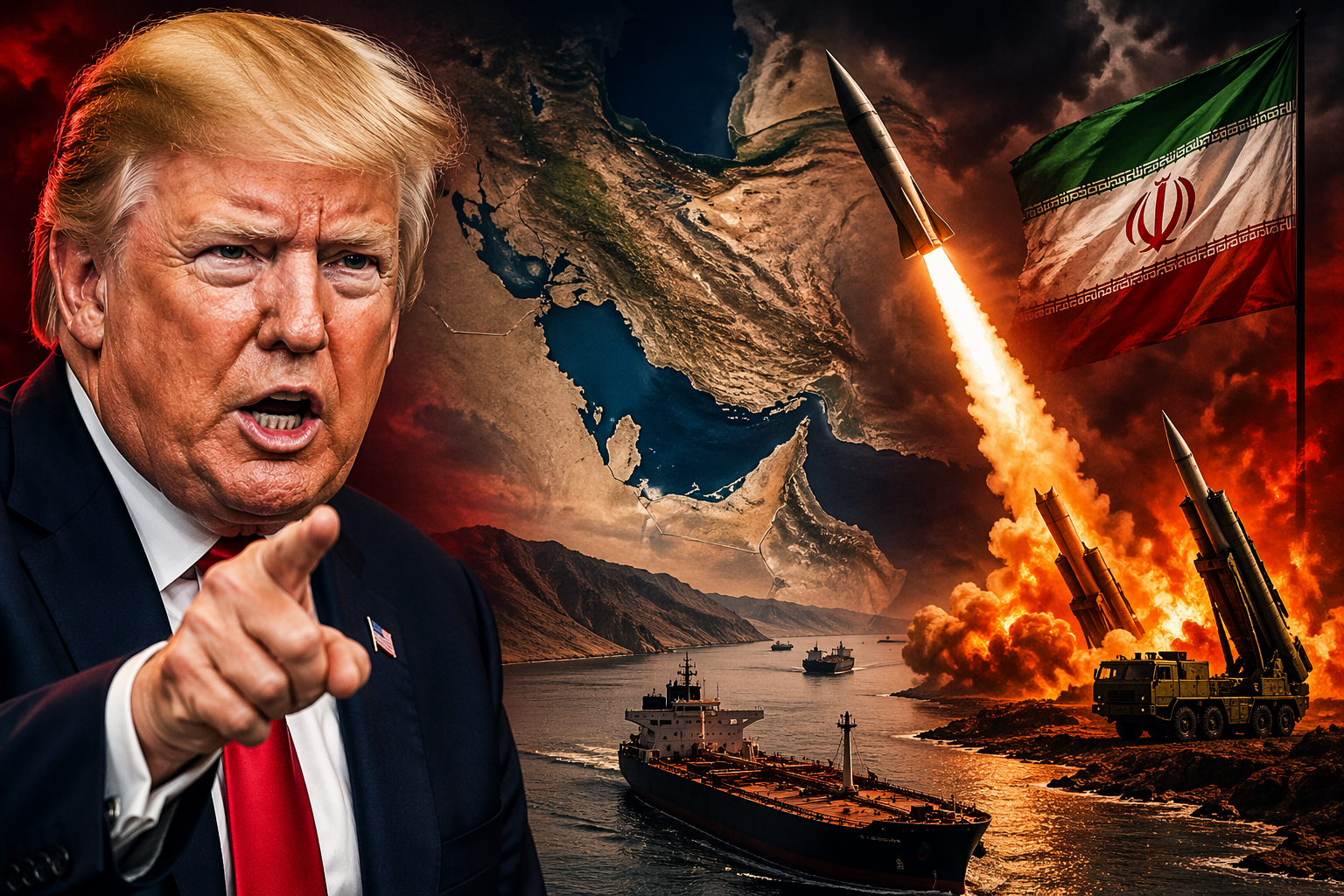
Tensions between the United States and Iran are continuing to escalate as discussions around economic pressure, military action, and regime instability dominate political debate in Washington. During a recent Fox News discussion, US Army Special Forces veteran Jim Hansen shared his analysis of President Donald Trump’s strategy toward Iran, arguing that the White House is increasing pressure while keeping military options open.
According to Hansen, President Trump appears increasingly impatient with Iran’s leadership while remaining satisfied with the economic blockade that is severely damaging the Iranian economy. Hansen claimed the pressure campaign is weakening Iran internally and pushing the country closer to a tipping point.
Hansen stated that Trump is not removing military action from consideration and suggested that further strikes or attacks on Iranian infrastructure could happen if Tehran refuses to negotiate. He described the current strategy as one where the United States has a significant advantage because the blockade hurts Iran far more than it hurts the US or its allies.
The discussion also focused heavily on the economic damage inside Iran. Hansen pointed to soaring inflation, a collapsing currency, and the Iranian government’s growing difficulty in funding its military and maintaining internal control. He argued that the Iranian regime is nearing a dangerous point where it may struggle to pay security forces and maintain order.
At the same time, the conversation acknowledged that Americans are also feeling the impact through higher fuel prices. Diesel prices in particular were highlighted as a burden on US consumers. However, supporters of Trump’s Iran strategy argued that the temporary economic pain is worth preventing Iran from obtaining nuclear weapons.
During the interview, Trump’s supporters defended the president’s hardline stance by arguing that previous US administrations failed to confront Iran aggressively enough. They claimed Trump was willing to accept political consequences in order to stop Iran from becoming a nuclear power.
Another major topic during the discussion was the possibility of internal unrest in Iran. Hansen claimed that worsening economic conditions could trigger public anger against the Iranian government, especially if shortages of food and essential supplies intensify. He said the pressure campaign is designed to create conditions where the Iranian people themselves push for political change rather than direct US-led regime change.
The conversation also touched on the Islamic Revolutionary Guard Corps (IRGC). Hansen stated that if he had a “wish list,” it would include targeting more IRGC leaders and finding ways to arm anti-government groups inside Iran. However, he acknowledged that such efforts would be extremely risky and difficult to execute.
One of the most controversial parts of the discussion involved ideology and religion. Hansen argued that Iran’s leadership follows an extreme interpretation of Shia Islam that believes a major conflict or “Armageddon-like” event could bring about the return of the 12th Imam. He claimed this belief system contributes to what he described as irrational decision-making by the Iranian regime.
The interview also included claims that President Trump personally believes he could destroy Iran’s infrastructure quickly if necessary, though he reportedly remains concerned about the long-term humanitarian impact on Iran’s population of more than 90 million people.
Hansen further argued that Iran’s oil exports are now central to the standoff. He claimed the blockade is limiting Tehran’s ability to sell oil internationally, reducing government revenue and creating additional pressure on the regime. According to him, if Iran cannot continue exporting oil, its energy infrastructure could suffer severe long-term damage.
The discussion ended with warnings that additional pressure could still be coming if Iran refuses to compromise. Trump supporters involved in the interview insisted that the United States would continue escalating pressure until Tehran either accepts a deal or faces even deeper economic and political instability.
Disclaimer: This article is based on statements and opinions expressed during a televised discussion and does not independently verify all claims made by guests or commentators. Geopolitical developments involving Iran and the United States remain fluid and subject to official confirmation from governments and international agencies.