

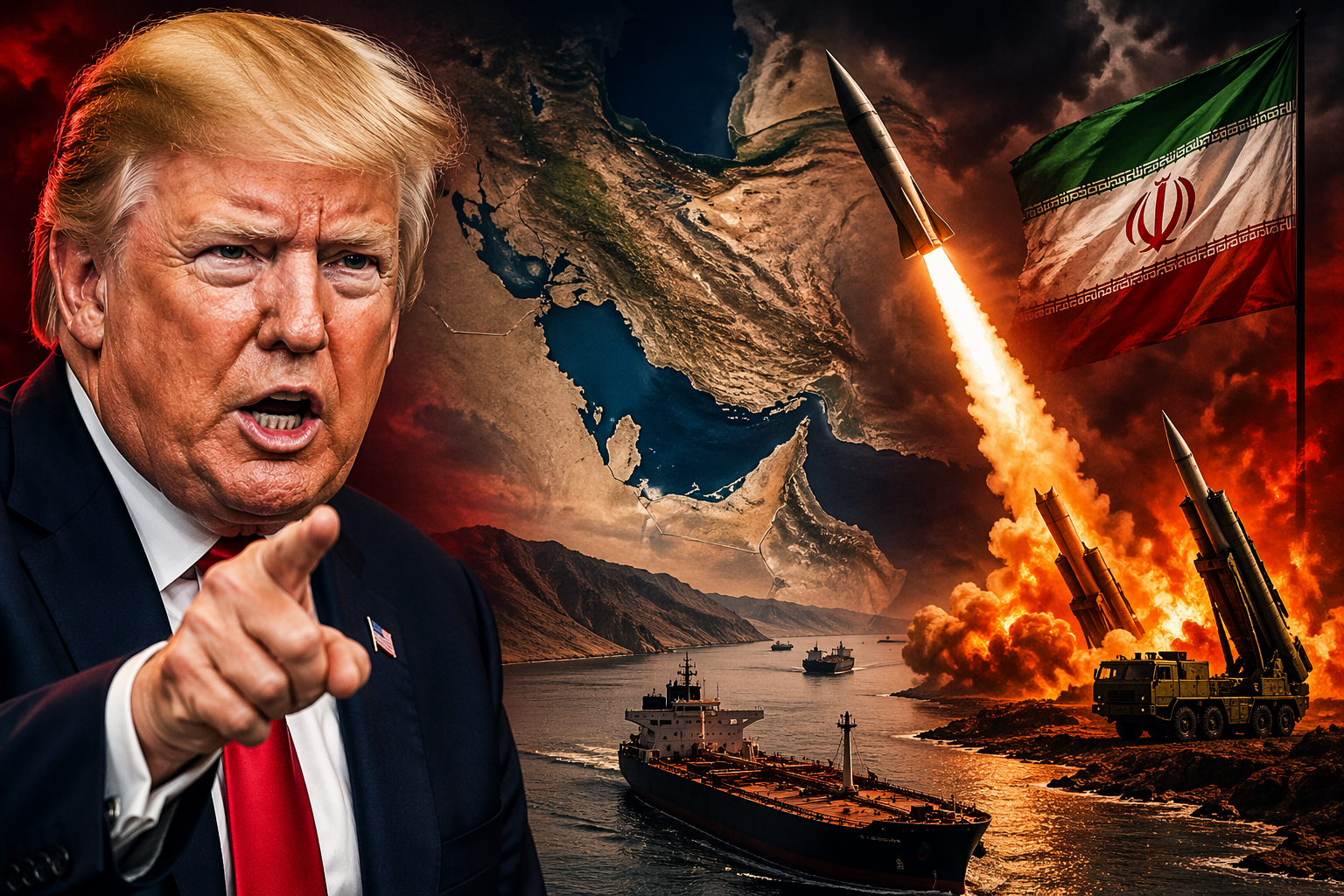
Tensions between the United States and Iran are once again escalating as the fragile ceasefire in the region approaches its expiration. According to recent developments, Donald Trump has indicated that he is unlikely to extend the ceasefire, raising concerns about a possible return to full-scale conflict.
At the center of the diplomatic efforts is J.D. Vance, who is expected to travel to Islamabad, Pakistan, along with a U.S. delegation for a new round of peace talks. However, uncertainty remains as Iranian representatives have not yet confirmed their participation, signaling ongoing disarray within Tehran’s leadership.
Iranian officials have accused the United States of violating the ceasefire and attempting to force a surrender through negotiations. Statements from Iranian leadership suggest that the country is preparing to escalate if necessary, claiming they have “new cards” to reveal on the battlefield.
One of the most critical flashpoints remains the Strait of Hormuz, a vital global oil route. Reports indicate that maritime traffic has been severely disrupted, with only a limited number of vessels passing through. The U.S. has accused Iran of repeated violations in this region, further complicating negotiations.
President Trump has taken a firm stance, repeatedly emphasizing that Iran must never be allowed to develop nuclear weapons. He warned that such a scenario would not only destabilize the Middle East but also pose a direct threat to Europe and the United States. He also rejected claims that he is under pressure to secure a deal, stating that time is not a constraint and that the outcome must be decisive.
Meanwhile, Israel has aligned closely with the U.S. position. Benjamin Netanyahu заявил that Israel is fully prepared to continue military operations if necessary. He highlighted Israel’s military superiority and reiterated the country’s commitment to defending itself and preventing Iran from gaining strategic advantage.
Behind the scenes, intelligence sources suggest that Iran is adopting a strategy of endurance, believing that prolonged conflict and rising energy prices could pressure the United States into making concessions. However, U.S. and Israeli officials appear confident in their ability to sustain operations for an extended period if required.
Another layer of complexity is the apparent lack of unified leadership within Iran. Questions remain over who is actually leading negotiations, whether it is the foreign ministry, parliamentary leadership, or the Islamic Revolutionary Guard Corps. Despite differing public statements, analysts believe all factions ultimately share the same strategic objective of resisting U.S. pressure.
There are also growing concerns about external involvement, particularly reports of materials and possible weapons shipments linked to China. Maritime interceptions and ship turnarounds have added to suspicions that alternative supply routes are being explored, increasing geopolitical tensions.
President Trump has outlined clear conditions for any agreement. These include reopening the Strait of Hormuz, halting uranium enrichment, and ensuring Iran cannot develop nuclear capabilities. He has warned that failure to meet these conditions could lead to direct strikes on critical infrastructure such as bridges and power plants.
Economic factors are also playing a crucial role. While energy prices have shown some volatility, they have not surged dramatically, suggesting that markets are cautiously monitoring the situation. However, analysts warn that any escalation could have immediate global economic consequences.
As the ceasefire deadline approaches, the situation remains highly fluid. The key question now is whether Iran will come to the negotiating table and agree to meaningful concessions, or whether the region will slide back into open conflict.
The coming days are expected to be decisive, not only for U.S.-Iran relations but also for global stability, energy markets, and geopolitical balance.
Disclaimer:
This article is based on publicly available information and media reports. The content is intended for informational and educational purposes only and should not be considered as financial, political, or investment advice. Readers are advised to verify information from official sources and exercise their own judgment.


