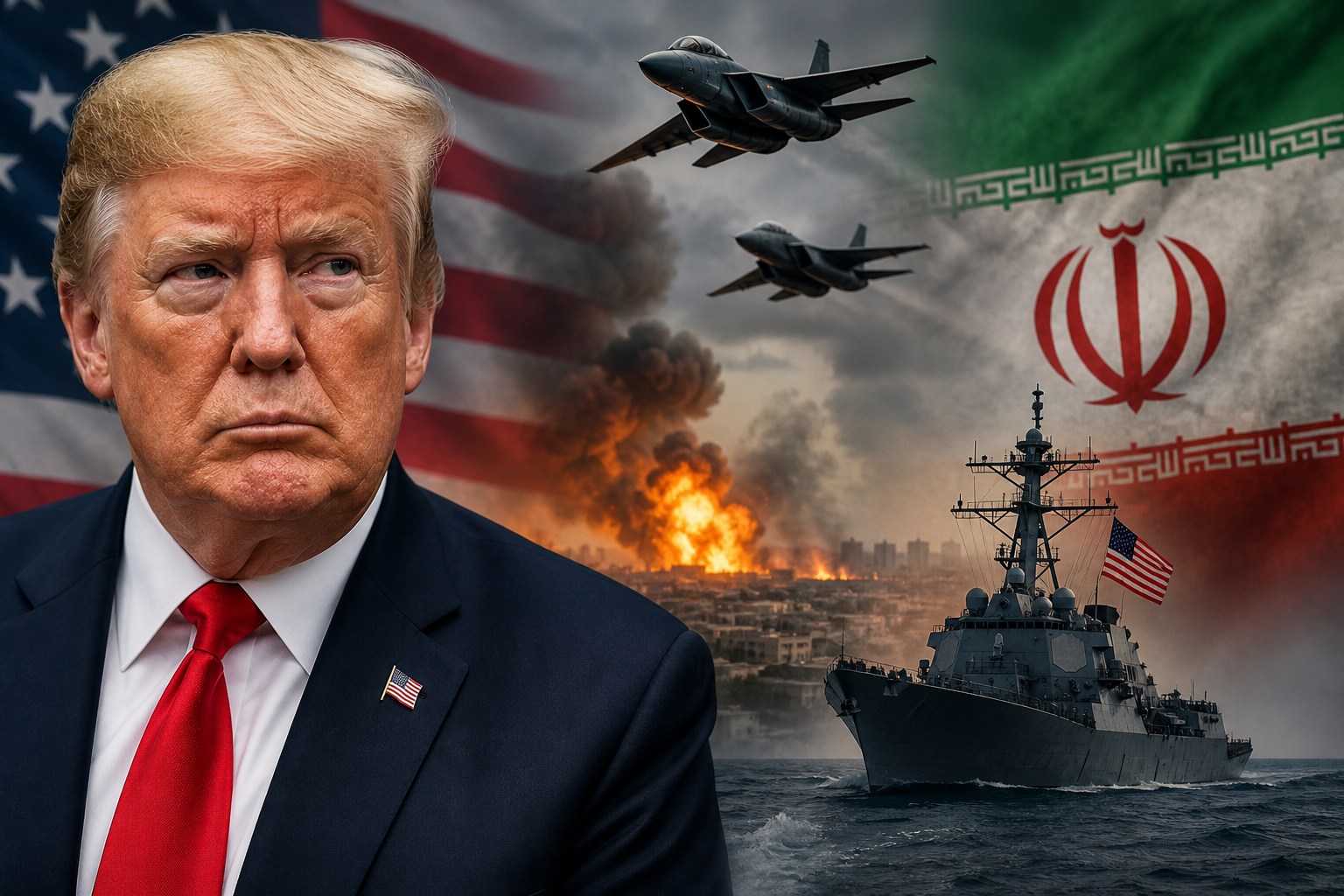
Tensions between the United States and Iran remain high as President Donald Trump signaled dissatisfaction with Iran’s latest diplomatic proposal and warned that additional military strikes remain possible if negotiations fail.
According to media reports discussed during the broadcast, Iran has submitted a 14-point proposal to the United States. However, the proposal reportedly does not address one of President Trump’s major demands — restrictions tied directly to Iran’s nuclear program.
The proposal reportedly includes a one-month deadline for negotiations aimed at reaching a broader agreement involving the reopening of the Strait of Hormuz, the removal of the U.S. naval blockade, and a permanent end to the ongoing conflict involving Iran and Lebanon. Another month would reportedly be allocated for identifying and arranging new sources connected to the agreement.
President Trump appeared frustrated with the proposal and suggested that Iran still has not faced sufficient consequences for its actions over the past several decades.
Speaking about the proposal, Trump said:
“I will review the plan Iran sent to the U.S. They have not yet paid a big enough price for what they’ve done to humanity and the world over the last 47 years.”
The president also left the door open for additional military action if Iran fails to cooperate or violates expectations during negotiations.
Trump stated that the damage already inflicted on Iran’s military capabilities could take decades to repair.
“If we left right now, it would take them 20 years to rebuild. But we’re not leaving right now. We’re going to do it so nobody has to go back in two years or five years,” Trump said.
When asked directly under what circumstances the United States would restart military strikes against Iran, Trump declined to provide specific conditions but made clear that the possibility remains active.
“I don’t want to say that. I can’t tell that to a reporter. If they misbehave or do something bad, but right now, we’ll see. But, you know, it’s a possibility that could happen, certainly,” he added.
Meanwhile, sources told Fox News that Admiral Brad Cooper, who is connected with U.S. Central Command operations, recently met with President Trump to provide updates regarding the Strait of Hormuz blockade and other regional security concerns.
The Strait of Hormuz remains one of the world’s most strategically important waterways, with a significant portion of global oil shipments passing through the narrow route. Any prolonged conflict or blockade in the region could have major consequences for global energy markets and international trade.
Despite the rising rhetoric and ongoing military concerns, officials say the fragile cease-fire currently in place is still holding for now. The White House has also reportedly informed Congress regarding timelines connected to the War Powers Act as the administration continues monitoring developments in the Middle East.
The latest developments come amid growing international concern over escalating tensions between Washington and Tehran, as diplomatic negotiations continue alongside military posturing in the region.