

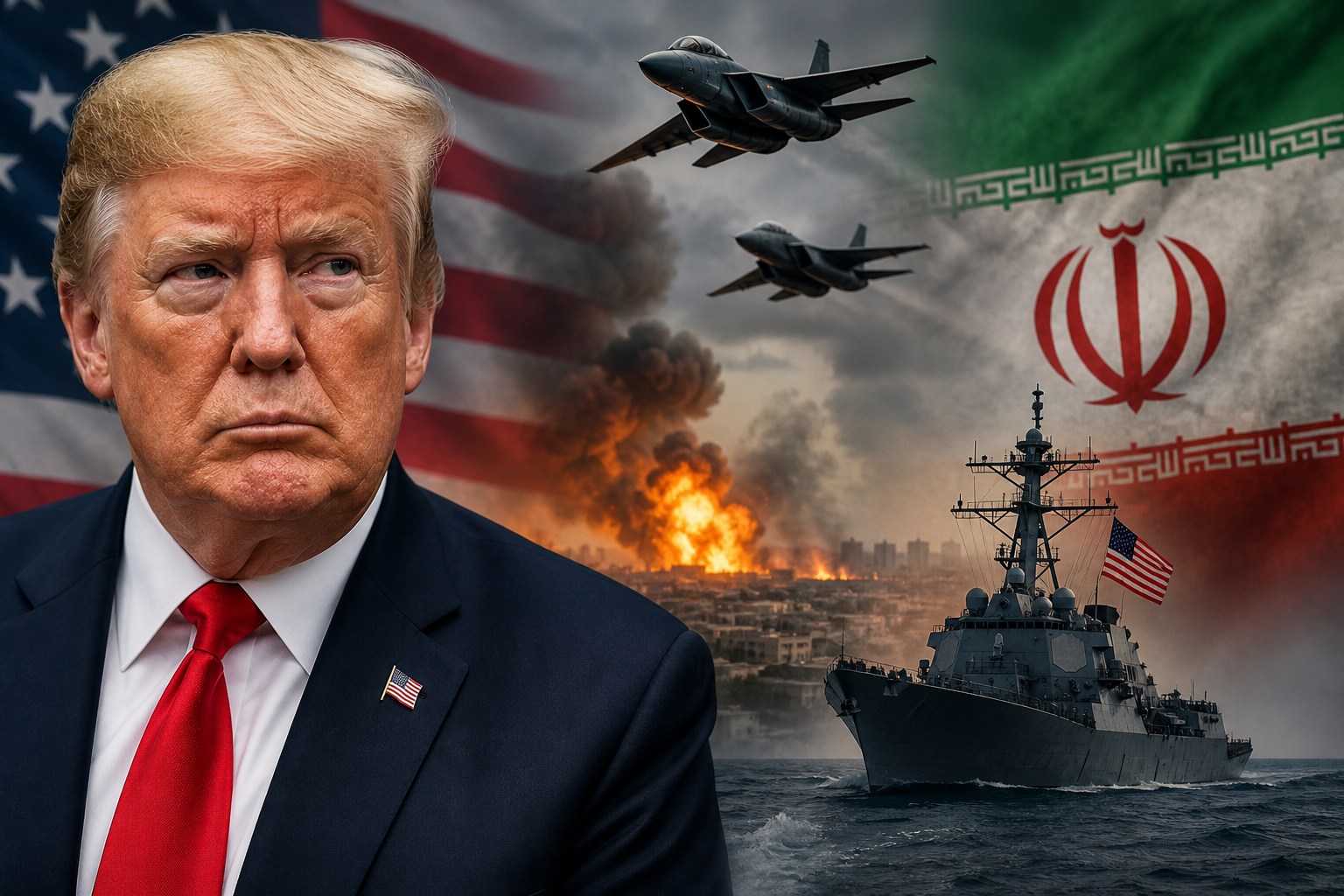
A major diplomatic breakthrough may be emerging in the Middle East after U.S. President Donald Trump announced that a new agreement with Iran has been “largely negotiated,” with only minor details still being finalized before an official announcement.
According to reports discussed during a Fox News broadcast, the developing agreement could become one of the most significant geopolitical developments in recent years, particularly due to its focus on Iran’s nuclear program, sanctions relief, and the reopening of the Strait of Hormuz.
Sources familiar with the draft agreement reportedly stated that U.S. military forces would remain near Iran for approximately 30 days. This provision is viewed as a signal that military options would still remain available if Iran violates the agreement or fails to comply with nuclear-related commitments.
The proposed deal would also reportedly provide Iran with significant economic relief. This includes oil sanctions waivers along with the release of frozen Iranian assets worth billions of dollars.
Regional Diplomacy Intensifies
The report revealed that President Trump recently held discussions with leaders from Saudi Arabia, Qatar, the UAE, Egypt, Jordan, Turkey, and Pakistan in an effort to secure broader regional support for the negotiations.
A regional diplomat reportedly described the discussions as “very positive,” adding that progress was being made and that regional governments were supportive of the breakthrough achieved during the talks.
One of the most important elements of the negotiations involves the Strait of Hormuz, one of the world’s most strategically important oil shipping routes. President Trump stated that the strait would be reopened, though Iranian state media later pushed back on some interpretations of the agreement.
Iranian media reportedly claimed that the understanding does not represent a full return to prewar conditions but instead allows transit volumes to return to prewar levels within 30 days. This distinction suggests Iran may still seek to maintain some degree of control over the waterway.
Marco Rubio Hints at “Good News”
U.S. Secretary of State Marco Rubio also commented on the negotiations, suggesting that positive developments could emerge soon regarding both the Strait of Hormuz and the broader effort to prevent Iran from obtaining nuclear weapons.
Rubio stated that the goal remains creating a world where countries no longer fear an Iranian nuclear weapon, though he emphasized that negotiations were still not finalized.
Questions Remain Over Iran’s Nuclear Program
A major unresolved issue in the talks involves Iran’s existing stockpile of highly enriched uranium and the facilities used to enrich nuclear material.
The report explained the uranium enrichment process in detail, beginning with uranium ore extraction, its conversion into “yellowcake,” and later into hydrofluoride gas that is processed through centrifuges to increase uranium purity.
Currently, Iran reportedly possesses uranium enriched to around 60% purity, which analysts consider dangerously close to weapons-grade material. Civilian nuclear energy programs typically require only low levels of enrichment.
While early drafts of the memorandum reportedly address Iran’s nuclear activities, many critical technical details remain under negotiation.
Trump’s Position: “Iran Will Never Have a Nuclear Weapon”
According to the report, President Trump has remained firm that Iran will never be allowed to develop a nuclear weapon.
The developing agreement is expected to lay the foundation for a broader long-term arrangement involving restrictions on Iran’s enrichment capabilities, removal of highly enriched uranium stockpiles, and limitations on facilities capable of producing weapons-grade nuclear material.
The report also referenced “Operation Midnight Hammer,” after which some enriched uranium was allegedly buried, creating further concerns over monitoring and verification.
Israel’s Role and Political Divisions
The negotiations have also sparked debate regarding Israel’s role in the process. Reports cited by Fox News suggested Israeli Prime Minister Benjamin Netanyahu may have been sidelined during parts of the negotiations due to differences between Israeli and American objectives.
While the Trump administration has focused primarily on preventing Iran from obtaining nuclear weapons and stabilizing the Strait of Hormuz, some Israeli officials reportedly favored broader goals including regime change inside Iran.
Despite speculation about tensions, Israeli officials reportedly said they trust President Trump’s judgment and remain informed about ongoing negotiations.
According to the report, Israeli sources indicated that the United States has continued updating Israel regarding negotiations tied to both the Strait of Hormuz and Iran’s nuclear program.
The broadcast also highlighted divisions within U.S. political circles, with some prominent conservative voices reportedly expressing concern about a potential agreement with Tehran, while others inside the administration view diplomacy as the best path forward.
As negotiations continue, global markets and geopolitical observers remain focused on whether the proposed agreement can successfully reduce tensions in the Middle East while addressing long-standing concerns over Iran’s nuclear ambitions.
Disclaimer:
This article is based on publicly available media reports, televised discussions, and statements from officials. Geopolitical negotiations are ongoing, and details of the proposed agreement may change as official confirmations emerge


