

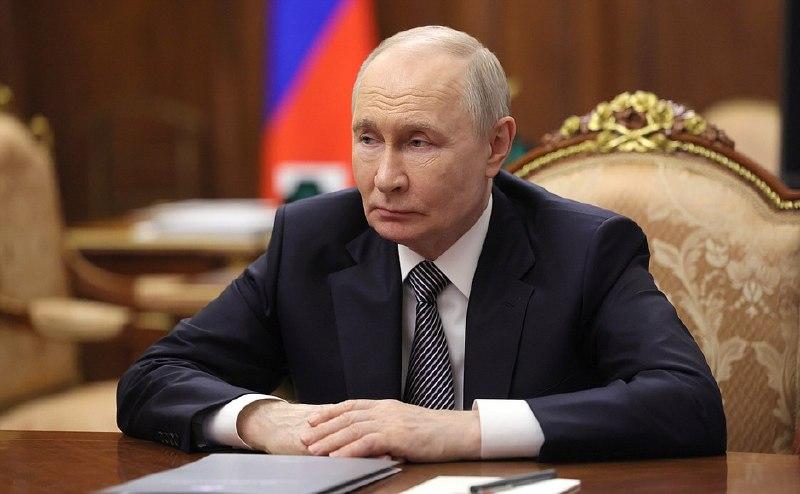
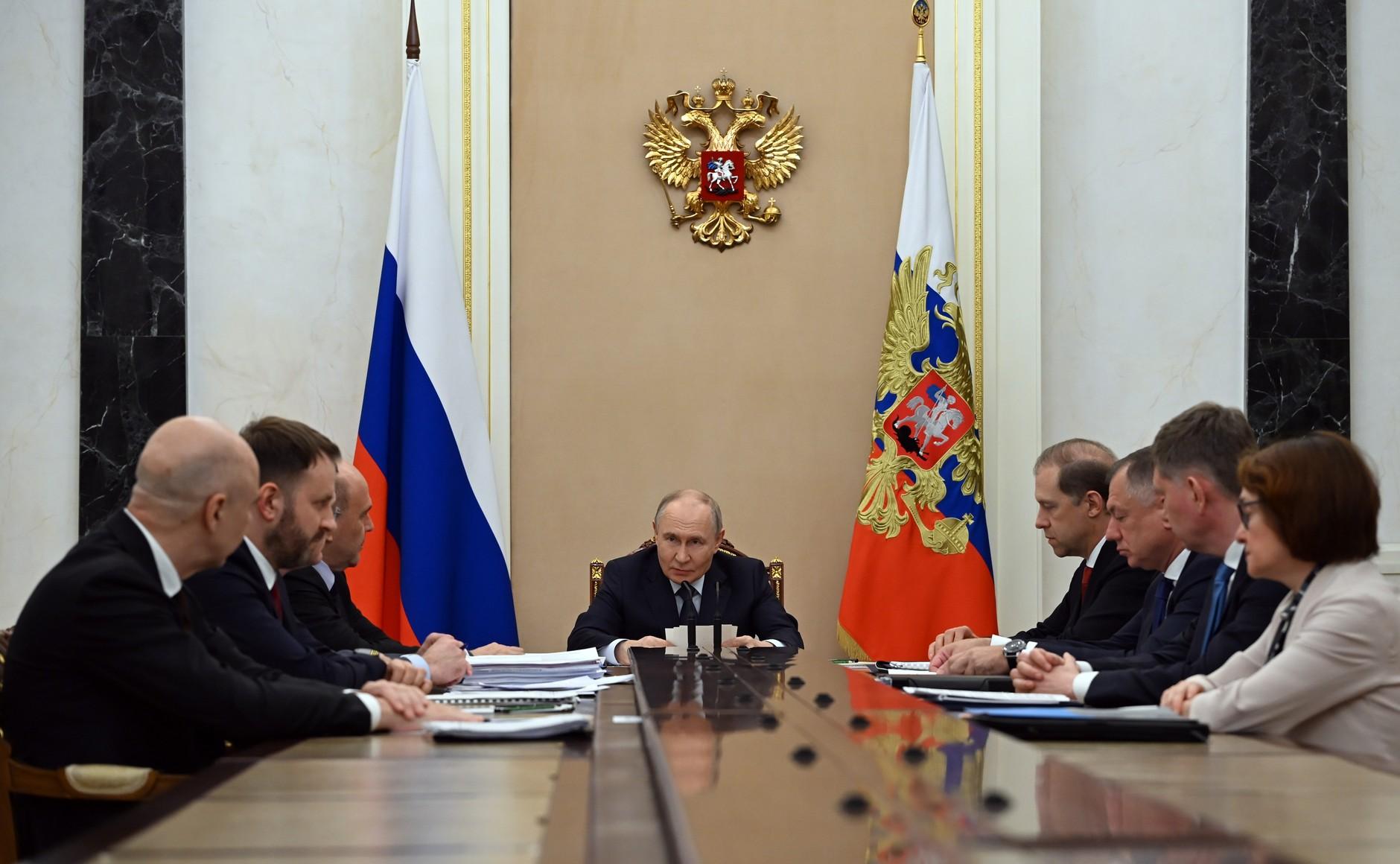
President Vladimir Putin has stated that Russia's economy remains stable despite continued external pressure on the country's fuel and energy sector and other industries. Speaking during a government meeting attended by Prime Minister Mikhail Mishustin, senior cabinet ministers, Central Bank Governor Elvira Nabiullina, and other top officials, Putin outlined the government's assessment of the current economic situation while announcing new measures aimed at supporting regional governments, encouraging investment, and sustaining long-term economic growth.
The meeting included Prime Minister Mikhail Mishustin, First Deputy Prime Minister Denis Manturov, Deputy Prime Ministers Alexander Novak and Marat Khusnullin, Deputy Chief of Staff of the Presidential Executive Office Maxim Oreshkin, Minister of Economic Development Maxim Reshetnikov, Finance Minister Anton Siluanov, and Central Bank Governor Elvira Nabiullina.
According to President Putin, Russia's economy has continued to demonstrate resilience despite what he described as external attempts to destabilize the country's fuel and energy complex. He emphasized that the challenges facing the energy market are temporary and are not expected to significantly affect Russia's overall economic trajectory.
Economic data presented during the meeting showed that Russia's Gross Domestic Product (GDP) increased by 0.3 percent in May. For the first five months of the year, cumulative GDP growth reached 0.2 percent, according to figures from the Ministry of Economic Development.
Putin attributed much of this economic stability to strong domestic demand generated by government spending, business investment, and consumer activity. He also highlighted continued growth in bank lending, noting that mortgage lending, corporate loans, and financing for the real economy have continued to expand. Central Bank Governor Elvira Nabiullina confirmed that lending activity remains on an upward trend.
The President further stated that Russia's money supply increased by approximately 13 percent year-on-year as of July 1. He said this expansion supports continued domestic demand and provides a foundation for stable economic activity in the coming months.
Public finances also showed positive indicators during the meeting. Putin announced that the federal budget recorded a surplus of 196 billion rubles in June. The improvement was driven by higher government revenues from both oil and gas exports as well as non-resource sectors of the economy.
Particularly notable was the performance of non-oil and non-gas revenues, which increased by more than 25 percent during the second quarter compared with the same period last year. Putin cited this as evidence that economic activity outside the traditional energy sector continues to expand.
While the federal government recorded a surplus, Putin acknowledged that the consolidated budgets of Russia's regional governments posted a deficit during the first half of the year, similar to the situation experienced in the same period of 2025.
To strengthen regional finances, Putin announced additional support measures aimed at ensuring that regional and municipal authorities can continue meeting their obligations while maintaining local development programs.
One of the key measures discussed was the extension of repayment deadlines for regional budget loans. Following an initiative proposed by the United Russia party, the government has already extended the repayment deadline for loans originally due in 2026 until 2030. According to Putin, this decision will provide Russian regions with access to more than 100 billion rubles in additional financial resources during the current year alone.
The President also revealed that lawmakers from the United Russia party have proposed extending repayment deadlines for additional regional budget loans scheduled to mature between 2027 and 2029. Under the proposal, repayment would also be postponed beyond 2030.
Putin instructed Finance Minister Anton Siluanov and the government to prepare the necessary legislation in cooperation with State Duma deputies so that the amendments can be considered during the parliament's autumn session. Siluanov confirmed that the government would proceed with the required regulatory work.
According to Putin, the objective of these measures is to provide Russia's constituent regions with greater financial flexibility, enabling them to address immediate budget priorities while simultaneously investing in long-term economic development, technological modernization, infrastructure projects, and support for business activity.
The President reiterated that Russia's economic policy must remain focused on long-term strategic goals rather than short-term challenges. He stressed that economic planning should be coordinated across the federal, regional, and municipal levels.
Putin also reaffirmed that one of the government's primary priorities is launching a new investment cycle while accelerating structural transformation across the Russian economy. He indicated that several additional economic initiatives were discussed with Prime Minister Mikhail Mishustin before the meeting and that further policy decisions will be considered during the upcoming meeting of the Council on Strategic Development and National Projects scheduled for August.
The President expressed confidence that the August meeting would produce concrete agreements aimed at strengthening investment, supporting technological development, and ensuring sustainable long-term economic growth across Russia.
Overall, the meeting highlighted the Russian government's strategy of maintaining macroeconomic stability through domestic demand, expanding lending, strengthening public finances, supporting regional governments, and encouraging investment despite ongoing international economic pressures.
Disclaimer: This article is based on official statements made during the Russian government meeting and summarizes the remarks of President Vladimir Putin and participating officials. The information presented reflects official government positions and is provided for informational and news reporting purposes. Readers should consider multiple sources for a comprehensive understanding of economic developments.


