

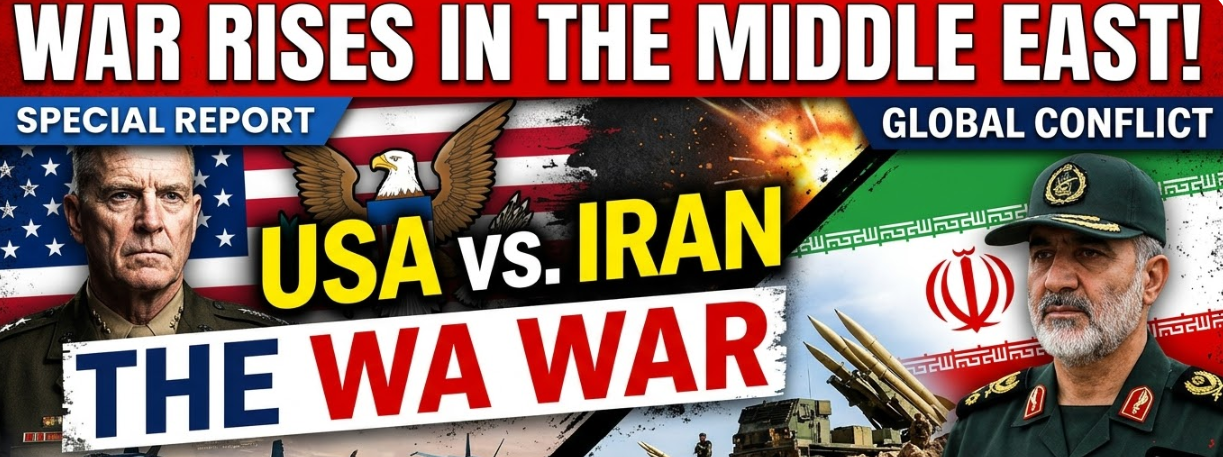
The ongoing conflict involving Iran, Israel, and the United States has entered a more intense and volatile phase, with fresh developments emerging from multiple fronts. According to reports from Tel Aviv, a senior Iranian intelligence official has reportedly been targeted in a precision strike overnight. This official was believed to be responsible for supporting a global network of sleeper cells aimed at threatening the United States and its allies across the world.
At the same time, the situation on the ground in Israel remains highly tense. In Ramat Gan, located on the outskirts of Tel Aviv, at least two people were killed following missile strikes. The attack involved cluster munitions, which scattered multiple smaller explosives over a wide area, causing significant risk to civilian populations. Visual evidence from the scene shows widespread destruction, highlighting the dangerous nature of these weapons.
Israeli military operations have also expanded beyond their borders. Overnight strikes targeted areas as far as Beirut, the capital of Lebanon, where at least one high-rise building was reportedly taken down. These operations are part of a broader strategy to weaken hostile infrastructure across the region. Simultaneously, strikes continue inside Iran, particularly aimed at a wing of the Islamic Revolutionary Guard Corps (IRGC). The objective, according to sources, is to prevent the Iranian regime from using this force to suppress internal dissent, as it has done during previous protests.
Despite ongoing efforts to neutralize missile capabilities, the threat has not yet been fully eliminated. Officials estimate that it may take several weeks before the ballistic missile threat against Israel is completely neutralized. Even as military operations continue, alerts have been issued warning of imminent missile fire, forcing civilians to seek shelter repeatedly. Although the number of missiles being launched appears to have decreased, the nature of the attacks has changed. The missiles are reportedly less precise but more indiscriminate, often releasing bomblets over populated areas, increasing the danger to civilians.
On the geopolitical front, tensions are also rising within international alliances. Criticism has been directed toward NATO allies for what is being described as insufficient support during this critical period. Some U.S. officials argue that the alliance’s credibility is at stake if member nations fail to stand together during operations that serve mutual interests. It has been suggested that NATO’s relevance could be questioned if it does not provide stronger backing in such conflicts.
From a military standpoint, some analysts and former officials are describing the ongoing operation as one of the most successful in recent U.S. history. They argue that multiple objectives have been achieved, including targeting Iranian leadership, weakening proxy forces, and reducing missile capabilities. According to this view, the operation has exceeded several key performance metrics set at the outset.
However, not all assessments are optimistic. A recent report suggests that despite weeks of sustained airstrikes, the Iranian regime is likely to remain in power, at least in the short term. While it may be weakened, there are concerns that it could become more hardline, with the IRGC consolidating greater control. This raises the possibility that the regime could become more aggressive rather than less, especially if it perceives itself as under existential threat.
Experts caution that the situation is highly dynamic and cannot be judged based on a single moment in time. Continued operations targeting regime structures and leadership may still alter the trajectory of the conflict significantly in the coming days and weeks. The central question remains whether Iran will emerge from this conflict as a diminished threat compared to its position just over two weeks ago.
Back in the United States, national security concerns are also intensifying. Officials are expected to testify on global threats, including the risk posed by sleeper cells and lone-wolf attackers. There is growing concern that these threats may have been exacerbated by previous border policies, which critics argue allowed potential infiltration. The focus now is on identifying and mitigating these risks before they materialize into direct attacks.
At a broader level, some analysts believe that the current administration has significantly reshaped the global geopolitical landscape. With developments spanning Iran, Venezuela, and even Cuba, it is argued that the strategic positioning of the United States has shifted in ways not seen for decades. Whether this shift will lead to long-term stability or further escalation remains uncertain.
As the conflict continues to evolve rapidly, the coming weeks are expected to be critical in determining both the regional balance of power and the global implications of this confrontation.
Disclaimer
This article is based on publicly available information, media reports, and ongoing developments in a rapidly evolving geopolitical situation. The information provided is for informational and educational purposes only and should not be considered as verified or final. Readers are advised to follow official government statements and trusted sources for confirmed updates.


