

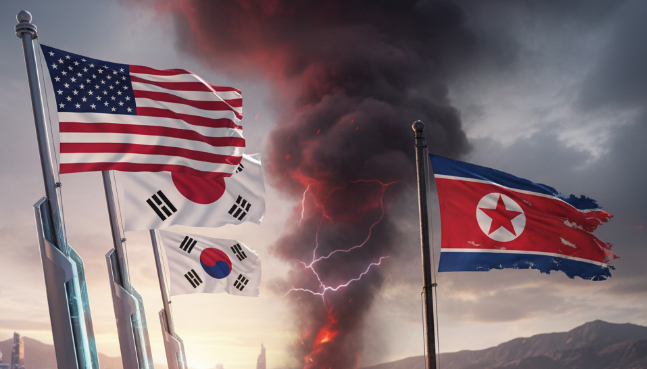
New York City, September 22, 2025 – The United States, Japan, and the Republic of Korea (ROK) reaffirmed their shared commitment to strengthening security, stability, and prosperity in the Indo-Pacific during a high-level trilateral meeting held in New York. U.S. Secretary of State Marco Rubio, Japan’s Foreign Minister Iwaya Takeshi, and South Korea’s Foreign Minister Cho Hyun convened to discuss regional challenges, expand cooperation, and reinforce a collective vision for a free and open Indo-Pacific.
The joint statement emphasized three core areas: security and defense, addressing North Korea’s threats, and enhancing economic resilience.
Strengthening Regional and Global Engagement
The United States underscored its ironclad defense commitments to Japan and the ROK, backed by America’s unmatched military strength, including nuclear capabilities. The U.S. reaffirmed its extended deterrence guarantees, which both allies agreed are central to stability on the Korean Peninsula and in the wider Indo-Pacific.
The leaders reiterated their determination to advance trilateral security cooperation through robust defense initiatives, including the continued conduct of the trilateral multi-domain exercise “Freedom Edge.” The three nations also agreed to strengthen individual and collective defense capabilities.
Maritime security was another focal point. The ministers welcomed trilateral coast guard cooperation and knowledge-sharing to enhance maritime incident response. They reaffirmed commitments under the Trilateral Maritime Security and Law Enforcement Cooperation Framework, including providing capacity-building support to ASEAN member states. The statement strongly opposed unlawful maritime claims in the South China Sea and denounced destabilizing attempts to alter the status quo. The three countries emphasized their collective resolve to safeguard freedom of navigation and overflight as enshrined in the UN Convention on the Law of the Sea.
On Taiwan, the statement highlighted growing concerns over destabilizing activities around the island. The ministers called for the peaceful resolution of cross-Strait issues, opposed unilateral changes to the status quo, and expressed support for Taiwan’s meaningful participation in international organizations.
The ministers also reaffirmed unwavering support for ASEAN centrality, recognized the growing importance of the Arctic region, and agreed to deepen trilateral cooperation in that area. They encouraged continued efforts toward a negotiated settlement between Russia and Ukraine.
Addressing the North Korean Threat
North Korea’s nuclear and missile programs were a key priority. The three leaders reiterated their commitment to the complete denuclearization of the DPRK in line with United Nations Security Council resolutions. They stressed the importance of maintaining and strengthening the international sanctions regime, urging all UN member states to uphold their obligations.
The statement raised alarm over North Korea’s deepening military cooperation with Russia, particularly in missile development. The ministers called on both Pyongyang and Moscow to cease such activities, labeling them violations of the UN Charter and relevant Security Council resolutions.
Concerns also extended to North Korea’s malicious cyber activities, including those conducted by its IT workers. The leaders welcomed coordinated actions to counter such threats and emphasized public-private collaboration, building on the recent Joint Statement on North Korean IT Workers. They highlighted the ongoing work of the Trilateral Diplomatic Working Group on North Korean Cyber Threats.
In addition, the ministers underscored the need for close policy coordination on North Korea across all levels of government. They reaffirmed their commitment to resolving longstanding humanitarian issues, including abductees, detainees, unrepatriated prisoners of war, and separated families.
Enhancing Economic Security and Resilience
The trilateral partnership also focused on building stronger economic and technological resilience. The ministers agreed to advance cooperation on supply chain security, digital infrastructure, artificial intelligence, quantum technology, and biotechnology.
Energy security was highlighted as a priority, supported by U.S. liquid natural gas exports and other energy resources. The leaders pledged to diversify critical mineral supply chains and strengthen collaboration in Southeast Asia and Sub-Saharan Africa through the trilateral Early Warning System. They also agreed to accelerate efforts to develop and deploy advanced civil nuclear reactors under strict safety and nonproliferation standards.
To safeguard innovation, the countries reaffirmed commitments to protecting emerging technologies. The statement welcomed progress in cooperation, citing recent initiatives such as the Trilateral Workshops on Quantum Industrial Security and the Trilateral Technology Leaders Training Program. The leaders also expressed support for continued research collaboration among their national laboratories.
The ministers welcomed the Young Trilateral Leaders program, viewing it as a way to strengthen people-to-people ties. Standing united against economic coercion and non-market practices, they reiterated their support for a free and fair global economic order. They also pledged strong backing for South Korea’s APEC 2025 host year and expressed hopes for meaningful results at the upcoming APEC Economic Leaders’ Week.
Advancing Trilateral Cooperation
The statement concluded by highlighting the role of the Trilateral Coordinating Secretariat, tasked with aligning objectives and implementing practical cooperation. The ministers committed to maintaining trilateral meetings at all levels to ensure momentum in their joint efforts.
This trilateral meeting in New York showcased a deepening alliance between the United States, Japan, and South Korea, reflecting shared security concerns and an increasingly integrated approach to economic and technological challenges. By combining defense, economic, and diplomatic initiatives, the three countries reaffirmed their commitment to ensuring peace, stability, and prosperity in the Indo-Pacific and beyond.
Disclaimer:
This article is based on the official joint statement released after the trilateral meeting of the United States, Japan, and the Republic of Korea in New York City on September 22, 2025. It is intended for informational and news reporting purposes only. The views expressed are a summary of the statement and do not represent the personal opinions of the author or this publication.


