

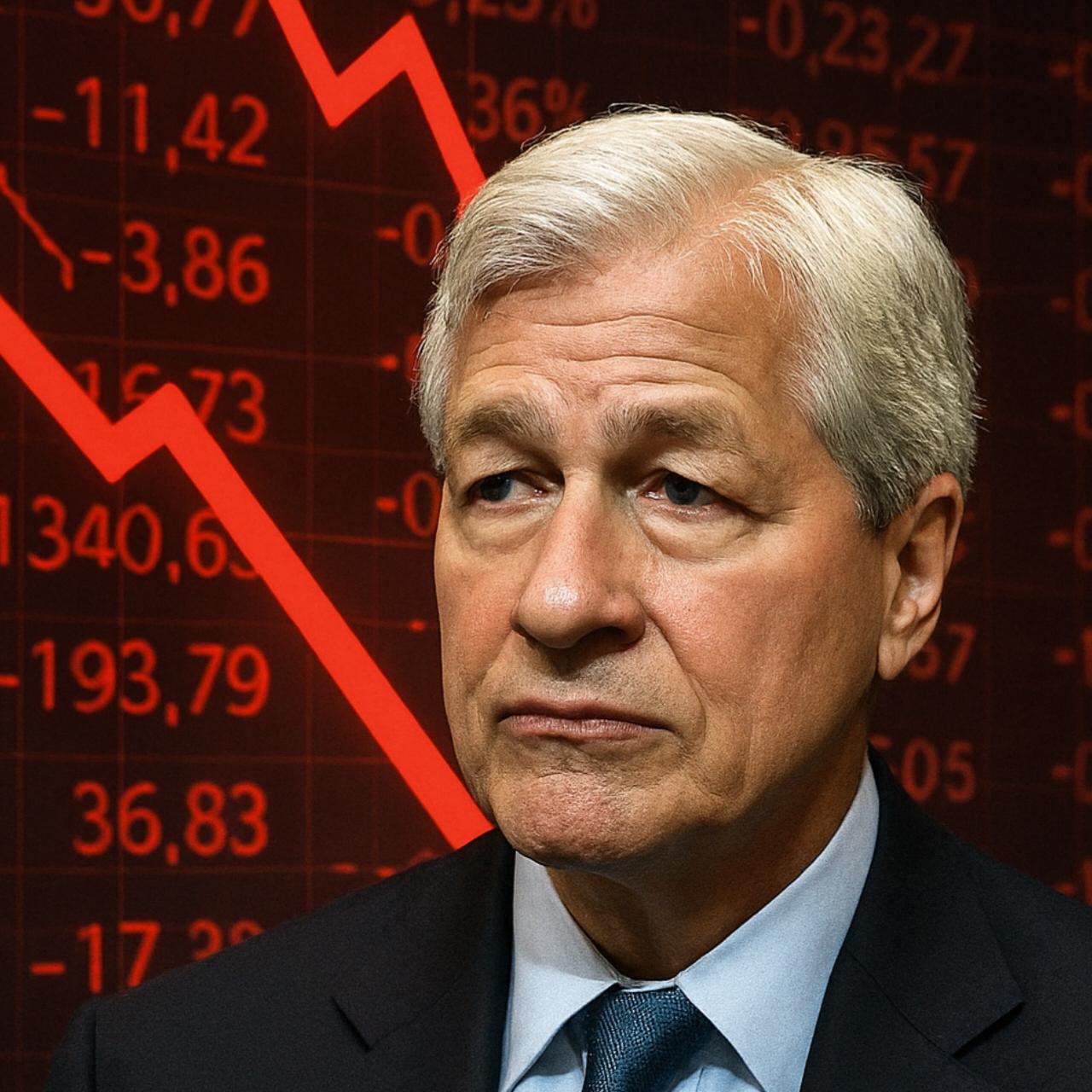
JPMorgan Chase Chairman and CEO Jamie Dimon has laid out a comprehensive vision for strengthening America’s economic and national security resilience, while also addressing China-related risks, capital market disruptions, and the broader macroeconomic outlook for 2026. Speaking in an extended interview, Dimon emphasized that geopolitical realities, supply-chain vulnerabilities, and policy decisions will shape the U.S. economy far more than short-term market fluctuations.
National security and economic resilience as investment priorities
Dimon said the need to invest in national security–linked industries has become increasingly clear since the Russia-Ukraine conflict. According to him, the assumption that the global environment would remain peaceful has been fundamentally shattered. He noted that military officials and defense-linked companies have repeatedly raised concerns about insufficient production capacity for critical equipment, including weapons, advanced components, and materials essential for modern defense systems.
A major concern highlighted was America’s dependence on single-country supply chains. Dimon pointed to rare earth minerals as a strategic vulnerability, noting that the U.S. relies heavily on China for key materials used in F-35 fighter jets, nuclear submarines, and other defense platforms. He also highlighted pharmaceutical supply risks, stating that roughly 90 percent of pharmaceutical ingredients and penicillin production are currently dependent on China.
According to Dimon, the issue is not solely about China but about building domestic security and resilience so the United States can reliably supply what it needs during crises. JPMorgan’s approach involves detailed categorization of strategic sectors, including rare earths, lithium, medical ingredients, drones, satellites, cybersecurity, education, and workforce development. He stressed that resilience requires not just capital investment but also long-term planning and industrial scale-up.
Government partnership and rare earth investments
Dimon expressed strong support for government involvement in strategic industries, citing rare earth processing as a prime example. He said extraction alone is insufficient, as materials must also be concentrated, processed, refined, and ultimately converted into usable components such as magnets. This multi-stage process requires time, capital, and policy support.
He praised the U.S. government’s decision to support Mountain Pass, one of the few American companies capable of processing and refining rare earth minerals. Dimon said long-term contracts with fixed pricing were essential to give such companies the stability needed to build scale and compete globally. Without this support, he warned, price undercutting by competitors could cause strategically important companies to fail before they mature.
Dimon added that policy reform is just as critical as funding. He specifically referenced the need to revisit regulatory frameworks, including environmental permitting processes, to ensure that projects essential to national security are not delayed indefinitely.
Managing China-related risks
Addressing concerns about JPMorgan’s business activities in China, Dimon emphasized that U.S. foreign policy is set by the government, not by private companies. He said JPMorgan strictly follows U.S. laws and national security directives and would immediately exit any relationship deemed inappropriate by U.S. authorities.
Dimon noted that JPMorgan serves approximately 30,000 multinational companies operating in China, many of which are American or global firms conducting lawful business. He said the bank does not violate national security policies and does not hesitate to walk away from deals or clients if required.
When asked directly whether JPMorgan would abandon an IPO or transaction if a company were assisting the People’s Liberation Army, Dimon responded unequivocally that the bank would walk away. He stated that JPMorgan does not need to chase such deals and would comply fully with U.S. government decisions regarding prohibited activities.
Despite acknowledging China as a strategic adversary, Dimon said he is not “afraid” of China. Instead, he emphasized deterrence, military strength, and economic resilience as the best safeguards. He quoted a long-standing principle that maintaining an army is expensive, fighting a war is more expensive, and losing a war is the most expensive outcome of all.
Outlook for the U.S. economy in 2026
Dimon described the near-term economic picture as relatively stable. He said American consumers continue to spend, companies remain profitable, and stock markets are elevated. While job growth has shown signs of modest weakening and inflation remains persistent, he said these factors have not yet derailed economic momentum.
However, Dimon warned that longer-term risks deserve greater attention. He highlighted massive government deficits in the U.S. and other countries as potentially inflationary forces. He also pointed to geopolitical tensions as a significant unknown that could impact economic conditions in 2026, 2027, and beyond.
Impact of government shutdowns on capital markets
Dimon strongly criticized recent government shutdowns, calling them damaging and unnecessary. He said such political dysfunction harms America’s credibility and economic efficiency regardless of which party is responsible.
During the shutdown period, IPO activity largely stalled due to the closure of the Securities and Exchange Commission. However, Dimon said underlying demand in capital markets remains strong. He described large backlogs in IPOs, debt issuance, and mergers and acquisitions, noting that pipelines tend to expand and contract depending on market conditions.
He cautioned that while deal pipelines appear robust, closures depend heavily on economic stability. A recession or sharp market shift could quickly disrupt transaction activity.
Response to subpoena and banking controversy
Dimon also addressed allegations related to subpoenas issued during investigations involving Trump Media and supporters. He rejected claims that JPMorgan provides banking services or disclosures based on political affiliation, religion, or ideology.
He explained that banks operate under strict legal and regulatory obligations and are required to comply with court-issued subpoenas. JPMorgan, he said, does not voluntarily hand over customer information simply because the government asks for it. Information is only provided when legally compelled by a court order.
Dimon acknowledged long-standing concerns about “debanking” practices and said he supports reforming rules that force banks into excessive reporting and compliance actions. He stated that these issues span multiple administrations and are not limited to any single political party.
According to Dimon, the core problem lies in outdated regulations that place banks in the position of making judgment calls they should not be responsible for. He argued that meaningful reform would protect customers while still ensuring national security and legal compliance.
Disclaimer
This article is based on publicly available interview transcripts and statements. It is intended for informational and educational purposes only and does not constitute financial, investment, or political advice.


