


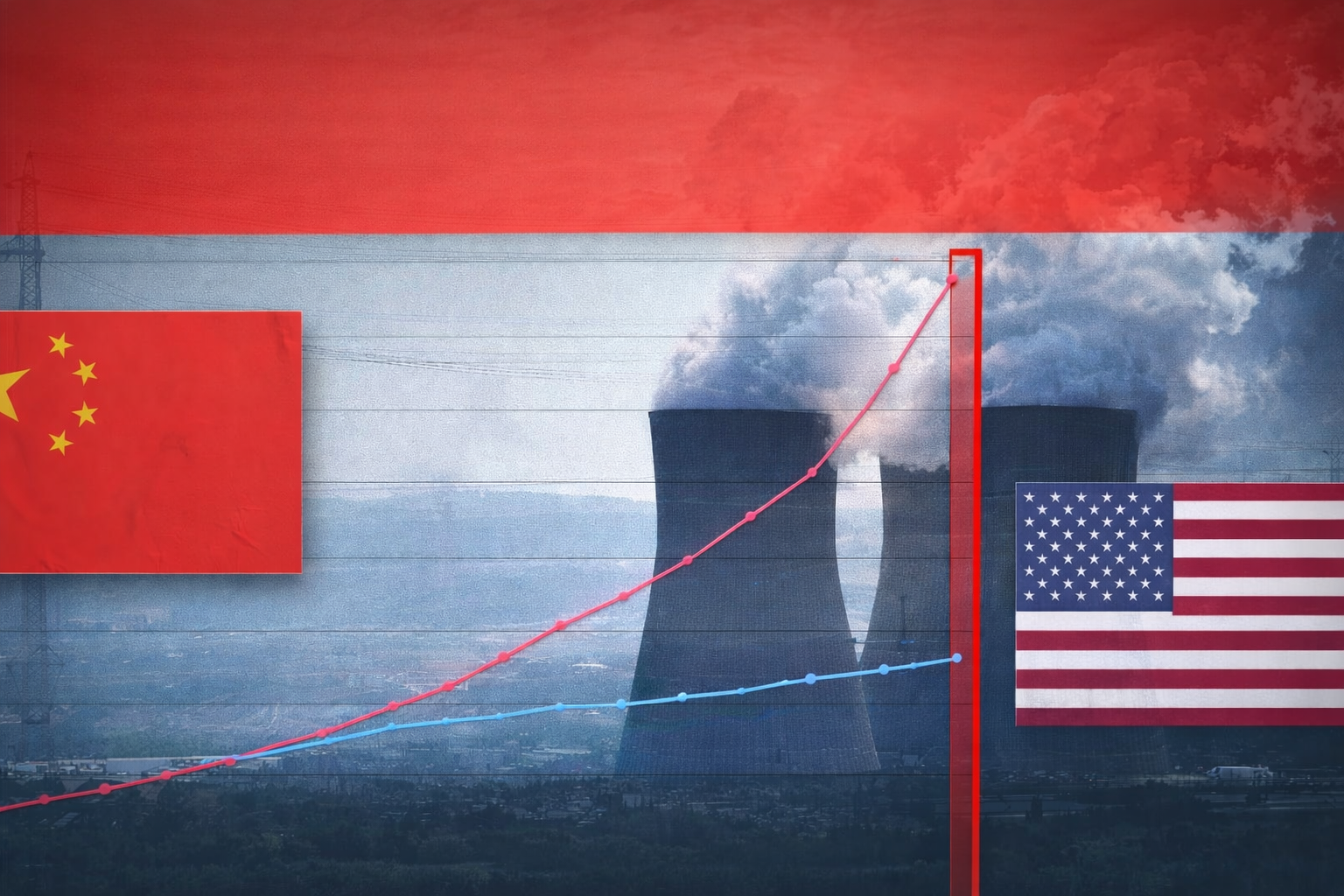
China is rapidly consolidating its position as the world’s dominant power-generation nation, widening the gap with other major economies and reshaping the global energy landscape.
China’s total installed power-generation capacity has now reached a record 3.75 terawatts, the highest for any country in history. What stands out is the pace of this expansion. Over the last eight years alone, China has doubled its overall capacity, reflecting the scale and speed of its infrastructure build-out across coal, hydro, renewable energy, and nuclear power.
In comparison, the United States currently has around 1.30 terawatts of power-generation capacity. This means China’s total capacity is nearly three times that of the US, underlining a dramatic divergence between the world’s two largest economies in terms of energy readiness and long-term planning.
The data shows that while US power-generation capacity has grown slowly and steadily over the past decade, China’s capacity has accelerated sharply, especially in recent years. This expansion is not only aimed at meeting domestic demand but also at supporting China’s industrial growth, electrification goals, and strategic ambitions in advanced manufacturing, electric vehicles, and data-intensive industries.
A major pillar of China’s energy strategy is nuclear power. At present, China has 34 nuclear reactors under construction, more than the next nine countries combined. In addition to these projects, nearly 200 other nuclear reactors are planned or proposed across the country. This pipeline signals a long-term commitment to large-scale, stable, and low-carbon power generation that can support economic growth for decades.
In contrast, there are currently no large commercial nuclear reactors under construction in the United States. Regulatory hurdles, high capital costs, long approval timelines, and policy uncertainty have slowed the development of new nuclear capacity, even as electricity demand is expected to rise due to artificial intelligence, data centers, and electrification of transport.
China’s expanding power capacity gives it a significant strategic advantage. Reliable and abundant electricity supports industrial competitiveness, reduces supply bottlenecks, and strengthens national energy security. It also allows China to scale emerging technologies faster than its competitors, from advanced semiconductors to green manufacturing.
For the United States, the growing gap highlights an urgent policy challenge. Without accelerated investment in power infrastructure, including nuclear, grid modernization, and next-generation energy technologies, the US risks falling behind in an era where energy availability is becoming a key determinant of economic and geopolitical power.
As global competition intensifies, power generation is no longer just an infrastructure issue. It is a strategic asset. China’s rapid expansion shows how energy policy, industrial planning, and national strategy are increasingly interconnected. The coming years will reveal whether the US can respond with the speed and scale needed to keep pace in this critical race.
Disclaimer: This article is for informational and educational purposes only. It does not constitute investment, financial, or policy advice. Readers are advised to consult official data sources and experts before drawing conclusions or making decisions based on this information.


